Gone Right…and Wrong
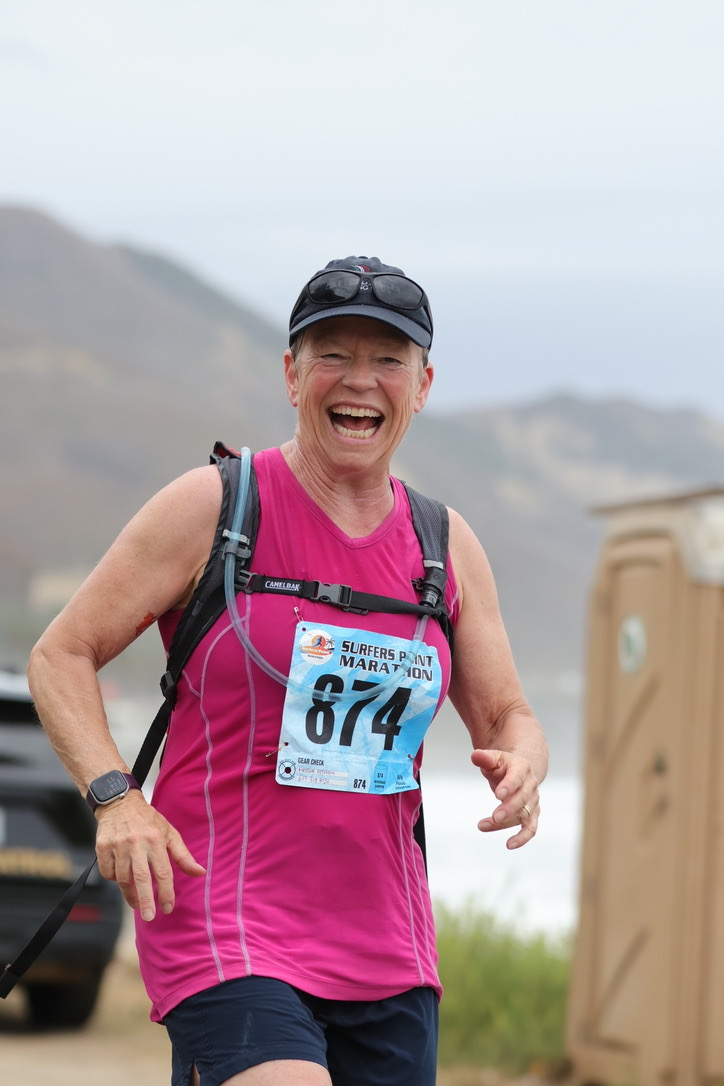
I just completed my eighth marathon two weeks ago. For the uninitiated, the marathon distance is 26.2 miles or 42 kilometres. Not for the faint of heart, but entirely doable, and is, interestingly, one of the fastest-growing running sports there is.
What made it a BHAG? (A *Big, Hairy, and Audacious Goal [acronym courtesy of the book Built to Last by Jim Collins and Jerry Porras].)
I’d set this particular goal five years ago while overcome with a significant back injury complicated by my beloved father’s decline and death during COVID. The idea of running another marathon in my 65th year became a siren call over the ensuing years of rehabilitation and the scores of providers (15) and procedures (8) needed to get me over the line.
For a long time, this idea lived so far in the future that it was just a fun topic of conversation, and all the better that it was so on-brand. I was doing something big! Hairy! Audacious! Dare I say gritty!
Here’s where having a BHAG really helped. I had the clearest of purposes. A 26.2-mile purpose. Down to the tenth of the mile. I had a goal I had executed before–seven times–and felt I knew what it took to get there. The fact that it had been 15 years since my last marathon made it interesting, not daunting. I was curious to see how I’d go. And with that BHAG as a North Star, everything that went into it – preparation, rest, cross-training, nutrition? Just lines on the to-do list, ticked off without question.
At the same time, I made some mistakes. Heck, if I could have one BHAG, why not two? I signed up for not one, but two state championship rowing regattas and recruited an Olympic champion rower (cuz if you know one, why not? :)) to write our crew a legit training program. The likes of which included training intensities I’d never touched before in my rowing career. All this while also ramping up my running miles.
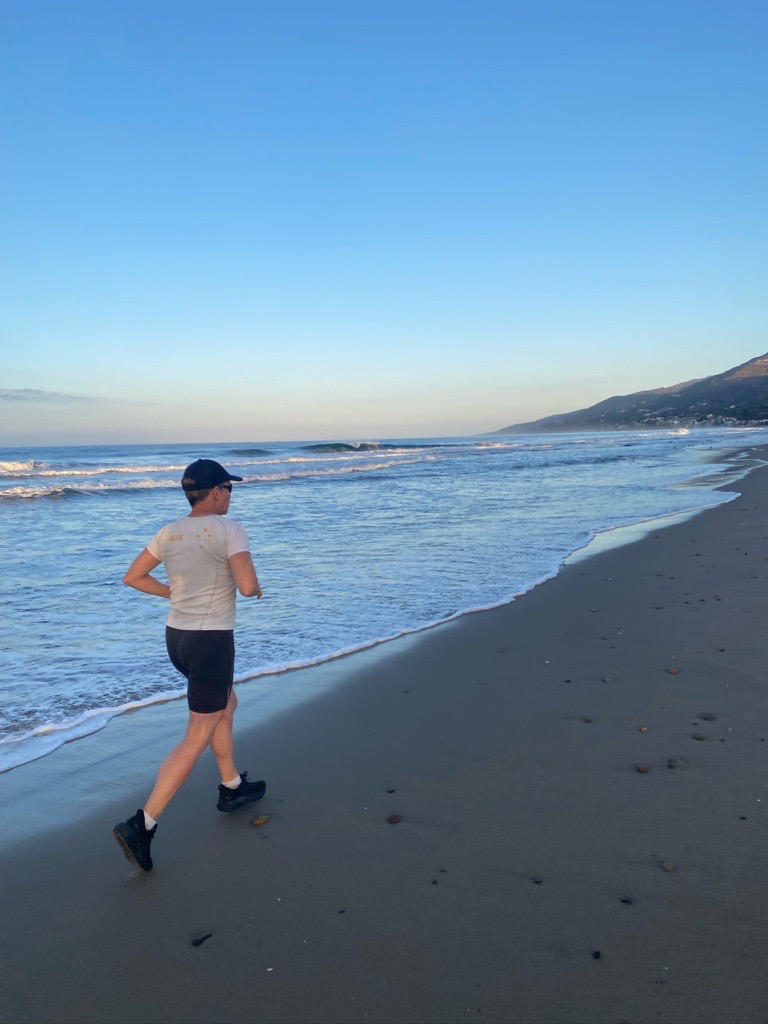
So, inevitably, I crashed. During one long run, I started to wobble. Soon I was getting passed…by walkers. Dizziness and confusion soon followed. That wake-up call prompted me to start working with my good friend and (as it happened) world-class sport nutritionist. It turned out that I was chronically under-fuelling relative to my training load. I got schooled in modern hydration, electrolyte, and carbo-loading science. In addition to more carbs, this meant lower fat and fibre. Hello white bread and rice! And wayyy more quantity.
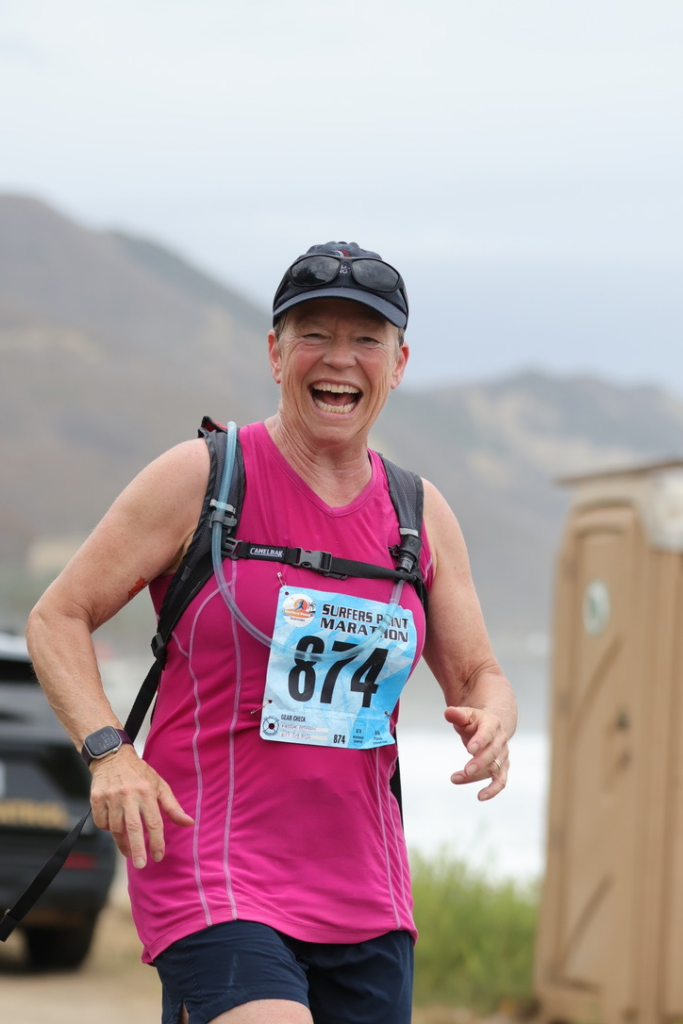
I’d just signed up to do a marathon in Queensland when my daughter, Mika, put her hand up to join me. On the condition that I come to the USA where she was living, and we do the race there. Whew baby! One quick race pivot later, and Surfers Point Marathon in Ventura, CA, here we come. The specific race picked for the sole reason that it sounded flat. And maybe pretty.
Hindsight being 20/20, this was another layer of significance, however welcome, that I minimised. What was so exciting and heart-warming—running this particular race with my daughter!— put my motivation on overdrive. No price was too much to pay (international airfares during the Iran War, anyone?), no distance too long to travel.
My last 20-mile long run went, more or less, without a hitch. The next day, I was on the plane to the US, set up perfectly to do nothing but taper before the Big Day.
Except that Southern California was hot. Unprecedented, or so everyone told me. And every running effort I made was exponentially more difficult as a result. But I kept my cool, mentally, and went with it.
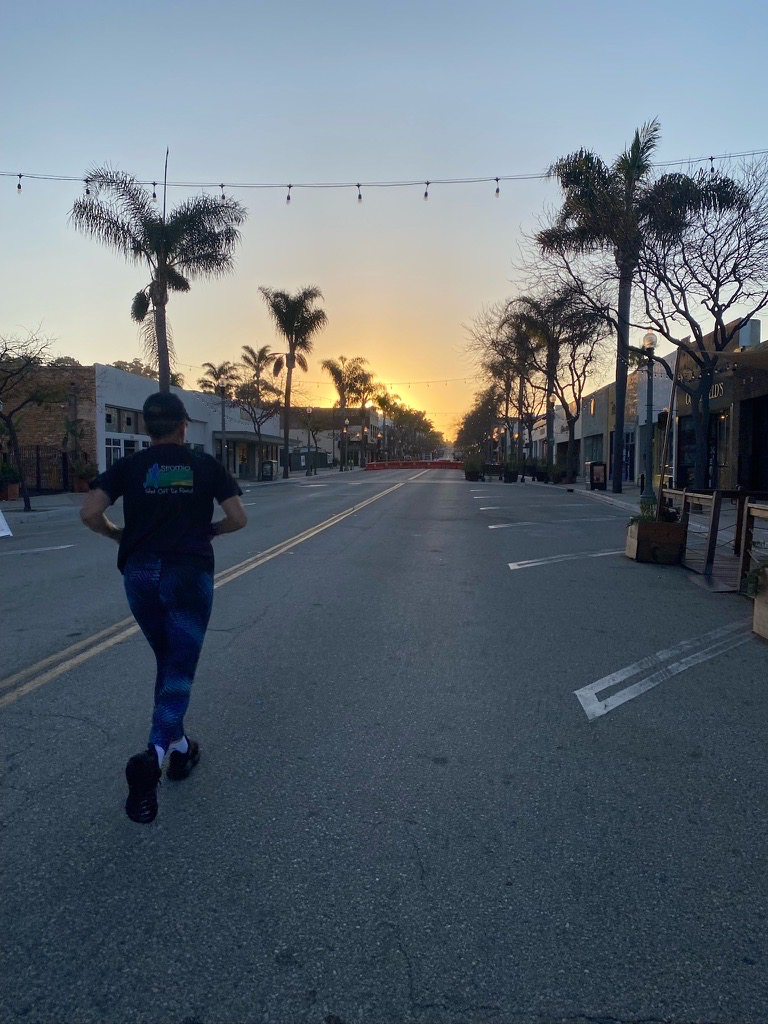
The day before the race, we picked up our racing bibs and found out the brutal truth of the race, which was staged on a small coastal road, on the shoulder, for a series of three 8.5-mile out-and-backs. Not loops, but turnarounds on the same little road. Whoops…missed that fine print! We took the news stoically, but I’d be lying if I said I wasn’t quietly panicked by that unexpected mental challenge of landscapes on repeat.
Finally, it was Race Day. We were a Team with a Plan – run 10 minutes, walk 1 minute to fuel and hydrate. We started in the dark, and once we got going, it was all about the doing. A relief, really, after all that training and anticipation.
But by the end of the first lap, I was shocked to find my physiology already faltering. My pace was slowing with no accelerator lever to pull. Our plan morphed into me setting the pace until I involuntarily slowed to the point where walking was faster. And then we walked until I could run again.
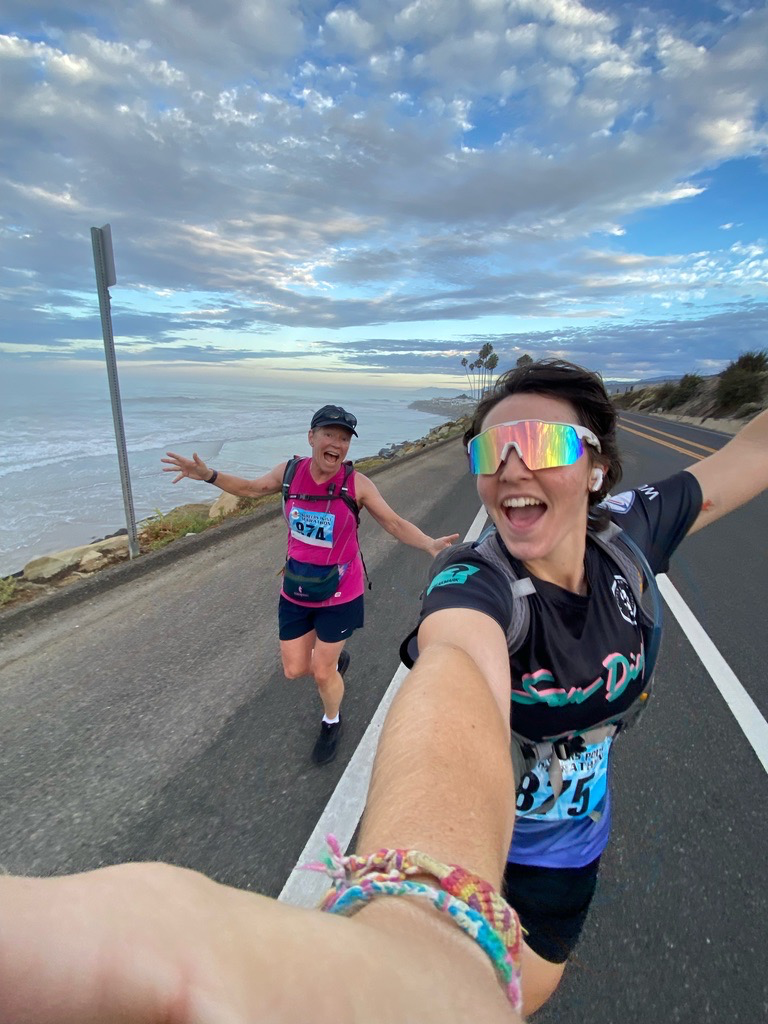
What I found fascinating, looking back, is how non-eventful this was. Mika was the ideal “go with the flow” partner as she was nursing her own foot pain. My attention became so wholly focused on helping my body ambulate that I had no bandwidth for boredom. Or irritation at the out-and-back nature of the race. Or the fact that other runners, many of them, were passing us.
Being so in the moment became the blessing. It turns out that flow just doesn’t give a shit about outcome. The race became a companionable partnership.
And we finished the race hand-in-hand.
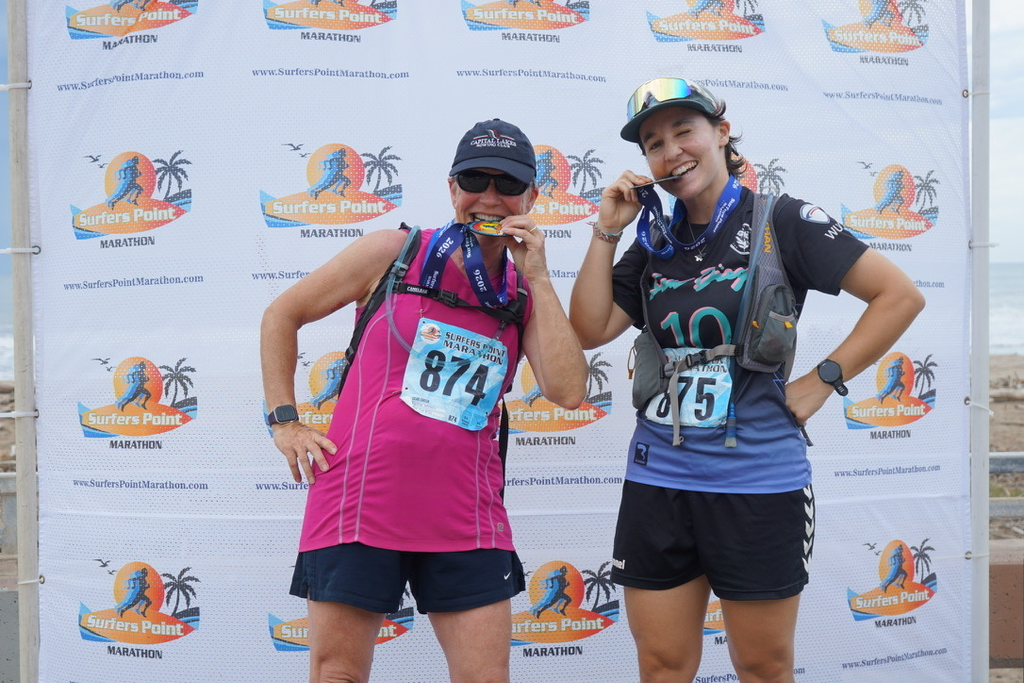
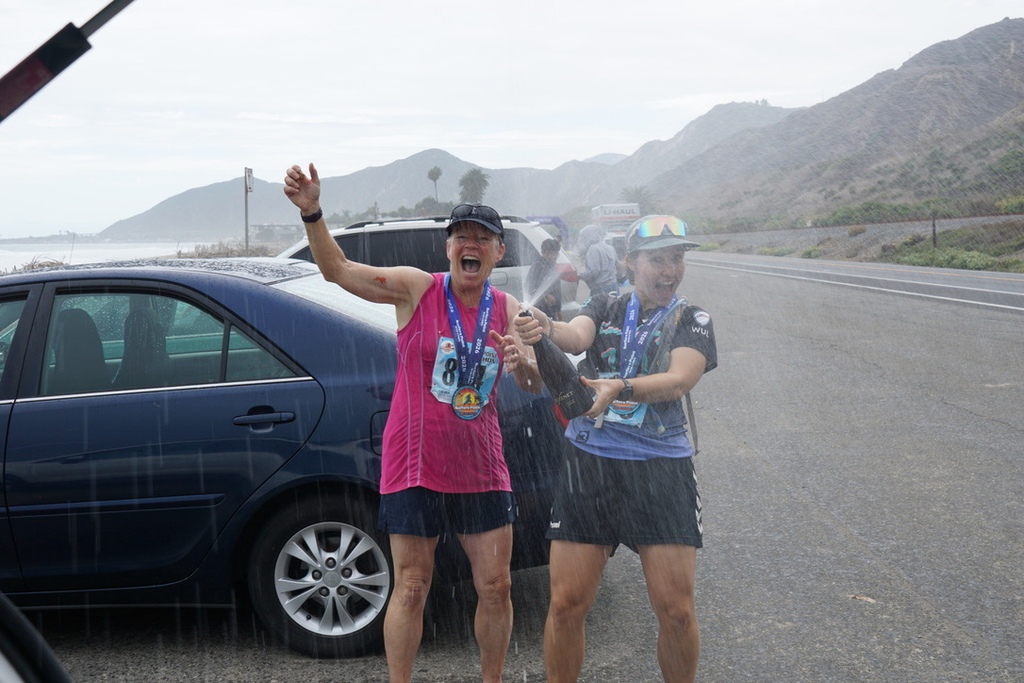
Meaningful. Inspiring. Emotional. I really lack the words to describe it.
Our roles became reversed during the race, with Mika leading the way. Near the end of the race, she confided that she had not realised she could be so nurturing. Damned straight.
And then, I was on a long-haul back to Australia the next day to make it back for a meeting I didn’t want to miss. I didn’t need hindsight to tell me that wasn’t the best idea…but I did it anyway.
And now, a couple of weeks later, I am paying a physical and mental price I never anticipated, and no one predicted. Various experts hypothesised the heat and the long-haul travel as culprits, but it was my nutritionist friend who used words I had never heard before:
Neurological and neuromuscular fatigue.
This is where the body has been so chronically underfueled and overstressed that, come race day, the brain’s only option is to prioritise keeping the body alive over any higher-order performance demands. All the preparation, planning, and race-day nutrition could not turn the tide brought on by my mostly wilful months of overgritting. And so I slowed. And slowed. And slowed.
The wonder of the new terminology I learned was how it opened doors of awareness I didn’t know were closed, or even existed. How does the brain prioritise survival? Slowing and loss of higher-order performance functions. Brain fog and emotional reactivity. Optic migraines. I ticked all the boxes.
But knowing this means something different for the next few months. This is not the kind of performance hole you dig out of in a day or even a week. For the next few months (!!), I need to stop performance evaluating, refrain from intense running and rowing, hydrate like hell, and learn to enjoy sport and fitness again for the experiences they are. I have literally decided to do the opposite of every one of my gritty fitness and running habits…and see where that takes me. :). No more running by myself. Seeking out physical activity that prioritizes social activity and fun over performance.
Honestly? This could be the biggest challenge this performance psychologist has faced in a longgg time.
This tale feels relevant to everyone out there who might be tempted to keep on trucking even when you know better. To those people who might not connect the emotional and physical stress dots over time. Who ignore the warning signs of a physiological system collapse. If you don’t take care of yourself, your brain will. Take it from someone who knows.
What are your “back-off” challenges?