
Just because people are smart and competent doesn’t meant mean they will work effectively together. Rather, quite often, if left to their own devices, the opposite is true, as I have explored in some recent writing. It turns out that being smart and/or talented may lead us—inadvertently or otherwise—to behave in ways that discourage, if not outright deny the chance for others to contribute. Even if and when that contribution could help the overall cause.
Sometimes it’s about ego. This is the athlete chasing the big play and the ensuing glory, even if passing the ball to a teammate ups the odds for the play to succeed. In business, this is the team member for whom being seen as the expert is the more important than allowing others to challenge ideas.
Sometimes it’s how the game is rigged. This is the workplace that celebrates individual accomplishments, thus setting the scene for ambitious people to hoard information or “go it alone” so as to increase their chances to be the hero.
We all can intellectually understand the idea that a group of people working together effectively should lead to better, more well-thought-out outcomes. And yet, workplace research tells us that few organisations do more than “we need to get better at collaborating” lip service. So how do we up our chances?
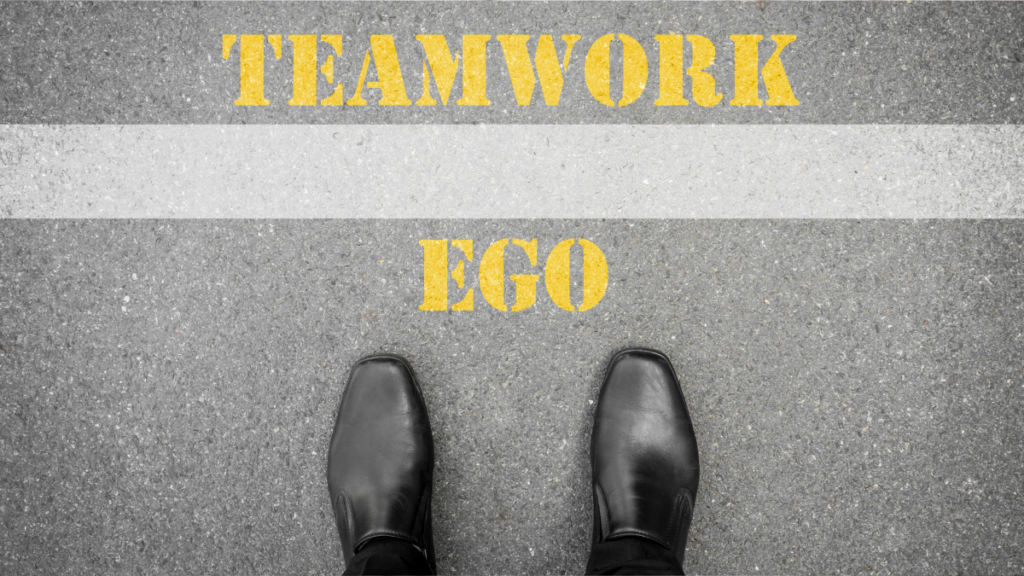
Tasks matter. When it comes to working together effectively, relationships do, too.
Some of us are just naturally better at relationships and relationship building. Others prioritise the task – getting things done – ahead of relationships. And, of course, there’s everything in between, including being strong (or weak) in both of these areas. The reality, by the way, is that better leaders do both–task and relationship building–well.
While at first glance, it would seem likely that task-oriented people would struggle more with teamwork and collaboration, relationship-first people have their own liabilities, often struggling with giving direct feedback or disagreeing with others. And of course, working effectively requires a combination of both qualities – technical expertise and “good with people” -ness.
The reality in most expertise-heavy organisations? Task-bias outweighs relationship bias. So when natural collaborators are in the minority, they learn early that their way is NOT the highway. And may just stop trying.
When teamwork isn’t enough.
It turns out, as well, that not all group work is the same. In sport, for example, working together on the field of play is all about teamwork: where the goal (winning) and roles are clearly defined. Great teamwork? When talented players (a) do their specific jobs well, and as importantly, (b) trust their teammates to do the same, and (c) execute great give-and-take between the roles at the right time.
Collaboration is more a shared process of creating or problem-solving with input from everyone involved. Instead of dividing tasks and silo-ing up, collaborators work together to shape outcomes. Collaboration is more appropriate than teamwork in situations characterised by ambiguity, creativity, and overlapping expertise. In sport, this is the post-competition debrief where people step out of their roles to brainstorm what went well and what could be done better next time.
It’s not hard to imagine that, over the course of, say, a sport team’s season, or a complex long-term consulting program, both teamwork and collaboration are important. Yet, given the increasing speed, complexity, and uncertainty in the business world, one might argue that effective collaboration is the priority group process for better, more well-thought-out outcomes.
Especially in organisations that celebrate “going it alone,“ the pace is fast, and on-time task completion is primary; collaboration is underused if not distrusted. Which is why relatively few workplaces have managed to inculcate effective collaboration processes into how they actually do business. And what we don’t practice regularly, we have no chance of perfecting.
If more collaboration is the answer, these are the questions we need to be asking.
- Do I know my potential collaboration partners? As in, do I even know who they might be, and do I really know them as people? In small firms, that could be everyone, but when knowing everyone is impractical, most of us could prioritise potential collaborator relationships and act accordingly. Knowing requires meeting, spending time getting to know each other – enough time to know what they do and how they do it. It requires enough time to give you a handle on their personality and character, and enables you to consider how working together could work. If you don’t know them…the chances you will want to work with them plummet.
Organisations that prioritise collaboration as a working tool create environments that encourage this kind of, dare I say, strategic intermingling and socialising as part of how they do business.
- Do I trust them? Trust is when you can put down your interpersonal armour and speak freely and frankly about your anxieties and doubts without fear of ridicule or reprisal. Acclaimed motivational writer Stephen Covey wrote the book, The Speed of Trust, which really says it all. When we trust each other, things can move more quickly.
Note: this kind of trustful relationship building is different and more substantive than a tit-for-tat “I’ll scratch your back if you scratch mine” transactional partnership. A good measure for how well you know and trust someone is how willing you are to help them out, maybe more than once, without looking for your favour to be returned.
- Are there opportunities to work together? Or even just think out loud together (especially useful in the early stages of a project, before processes get locked in). Doing this kind of brainstorm-y discussion can reveal a lot in terms of style, compatibility, and outcomes.
This is where you learn about how different people react when things are still open and uncertain. Who are the builders who seek to improve ideas and see what’s missing? Who pitches the things no one else thinks of? And who, like one young sport psychologist on my former AIS team, is the Eyeore (the gloomy stuffed donkey in AA Milne’s “Winnie the Pooh” tales) who sees the limits of ideas and is the first to say “that will never work”? Who, on the other hand, is like another member of my team, the manic Tigger who is the first to see that the group is stuck in thinking too much and that action is needed?
Getting real answers to these questions can help lay the groundwork for collaboration to stand a chance. Next on this agenda are the skill sets all good collaborators need.
How is collaboration working or faltering in your world?